

CAS No.:9028-53-9
Enzyme Activity:≥40U/mg
Optimum PH:PH=7.0, Neutral
Optimal Temperature:25-35ºC, Room Temperature
Storage Condition:Liquid enzymes are recommended below -15ºC. Low temperature transportation and storage. Solid enzymes are recommended for sealed storage and storage at temperatures below -8ºC.
Glucose Dehydrogenase (GDH) is an enzyme derived from plants, animals and microo
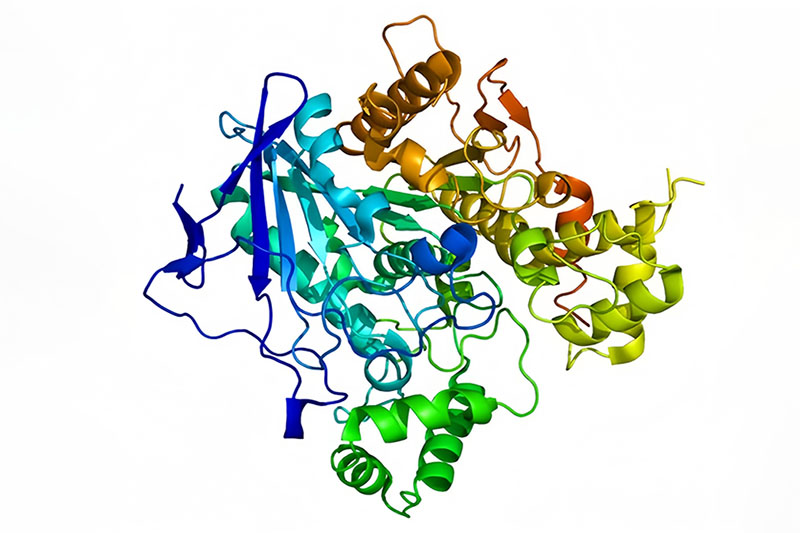
Glucose Dehydrogenase (GDH) is an enzyme derived from plants, animals and microorganisms that catalyzes the oxidation of glucose to gluconic acid and the reduction of coenzymes (such as NADH or PQQH2). Due to its high efficiency and specificity, GDH has a wide range of applications in medicine, food industry and biotechnology.
Function and advantage
Catalytic reaction: GDH catalyzes the conversion of glucose to gluconic acid and the reduction of coenzymes in a fast and efficient reaction process.
High specificity: GDH is highly specific to glucose and can accurately identify and act on glucose molecules to avoid interference from other sugars.
Strong stability: GDH shows good stability at a variety of temperatures and pH conditions and is suitable for applications in a variety of environments.
Application field
Blood glucose monitoring: GDH is widely used in blood glucose monitors to accurately measure blood glucose concentration by detecting the electrical signal generated by the reaction.
Food industry: GDH is used in the food industry as a key enzyme in the fermentation process to help improve fermentation efficiency and product quality.
Biosensors: GDH is used as a key element in biosensors to detect glucose concentrations, for applications such as environmental monitoring.
Diagnostic reagents: GDH is used in clinical diagnostic reagents to detect glucose levels to help diagnose and monitor diabetes and related metabolic diseases.
Research use: GDH is used in biochemical research to study the process of glucose metabolism and the mechanism of enzyme catalysis.