

CAS No.:9003-98-9
Enzyme Activity:≥300 U/mg
Optimum PH:PH=7.0, Neutral
Optimal Temperature:25-35ºC, Room Temperature
Storage Condition:Liquid enzymes are recommended below -15ºC. Low temperature transportation and storage. Solid enzymes are recommended for sealed storage and storage at temperatures below -8ºC.
Deoxyribonuclease I (DNase I) is a mammalian endonuclease that specifically hydr
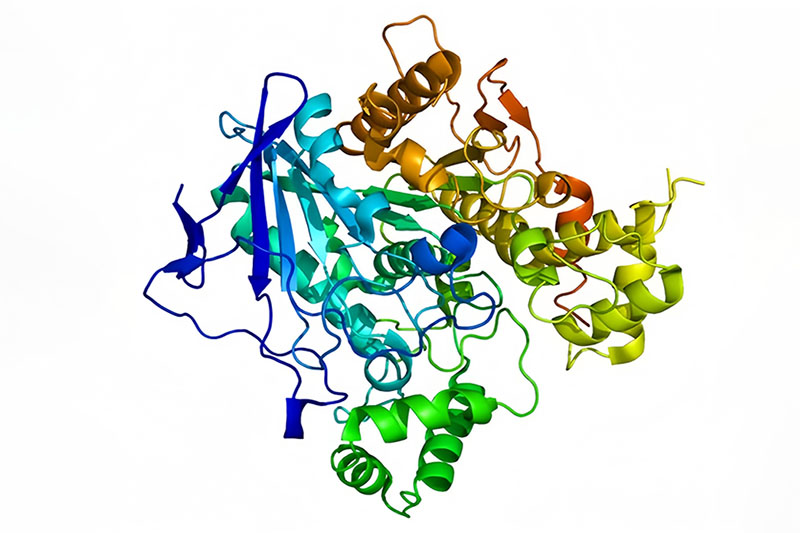
Deoxyribonuclease I (DNase I) is a mammalian endonuclease that specifically hydrolyzes phosphodiester bonds in DNA to generate oligonucleotides and mononucleotides. DNase I has attracted much attention due to its wide application in molecular biology, medical research and therapy.
Function and advantage
DNA degradation: DNase I is capable of efficiently degrading double - and single-stranded DNA by cutting it into smaller fragments, suitable for removing DNA contamination from samples.
Laboratory applications: In molecular biology experiments, DNase I is used to remove genomic DNA contamination in RNA preparation and ensure the purity of RNA samples.
Apoptosis research: DNase I plays a role in the process of cell apoptosis by cutting intracellular DNA and helping to study the mechanism of cell apoptosis.
Application field
Molecular biology: DNase I is used in nucleic acid extraction and purification processes to remove DNA contamination and ensure the accuracy of experimental results.
Genomics Research: In genomics and transcriptomics research, DNase I is used to process samples, ensuring high quality RNA and DNA preparation.
Clinical diagnosis: DNase I is used in some clinical diagnostic reagents to detect free DNA levels in plasma to help diagnose and monitor disease progression.
Therapeutic applications: DNase I is used to treat cystic fibrosis by degrading sticky DNA in the respiratory tract of patients and improving respiratory function.
Cell biology Research: DNase I is used to study apoptosis and DNA damage repair mechanisms to help understand the cell life cycle and disease processes.