

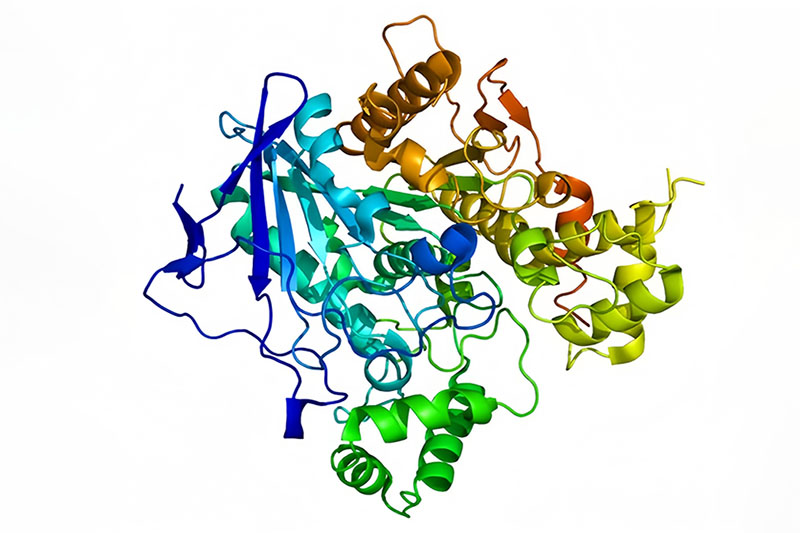
CAS No.:9087-70-1
Enzyme Activity:≥3.0U/mg
Optimum PH:PH=7.0, Neutral
Optimal Temperature:25-35ºC, Room Temperature
Storage Condition:Liquid enzymes are recommended below -15ºC. Low temperature transportation and storage. Solid enzymes are recommended for sealed storage and storage at temperatures below -8ºC.
Aprotinin is a peptide protease inhibitor, derived from bovine lung tissue, capa
Aprotinin is a peptide protease inhibitor, derived from bovine lung tissue, capable of inhibiting a variety of proteases such as trypsin, chymotrypsin, and plasminase. Because of its powerful protease inhibition, aprotinin has been widely used in medical and biotechnology fields.
Function and advantage
Protease inhibition: Aprotinin can effectively inhibit the activity of a variety of proteases, preventing protein degradation and fibrinolysis.
Anti-inflammatory effect: By inhibiting proteases, aprotinin can reduce inflammation and protect tissues and organs from damage.
Anti-bleeding effect: Aprotinin reduces fibrin degradation by inhibiting fibrinolytic enzyme and has a significant hemostatic effect.
Application field
Surgery: Aprotinin is used in heart surgery and other major surgical procedures to reduce intraoperative bleeding and protect organ function.
Acute pancreatitis: Aprotinin is used to treat acute pancreatitis by inhibiting trypsin, reducing pancreatic inflammation and tissue damage.
Experimental studies: Aprotinin is used in molecular biology and biochemistry experiments to prevent the degradation of protein samples and protect the integrity of the samples.
Anti-inflammatory therapy: Aprotinin is used to treat various inflammation-related diseases by reducing proteinase-mediated tissue damage and reducing inflammatory responses.
Fibrinolytic inhibition: In certain blood disorders, aprotinin is used to inhibit fibrinolysis and help maintain normal blood clotting function.