

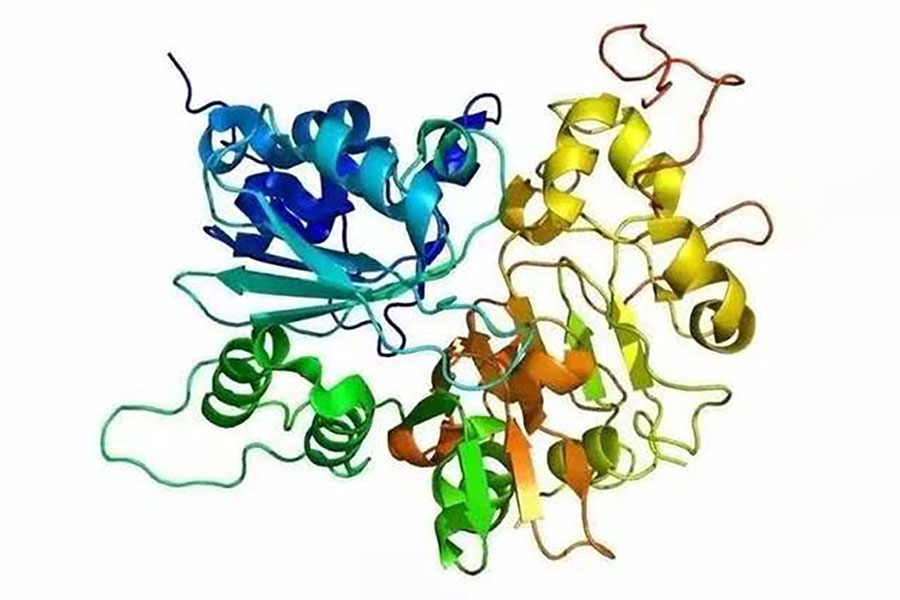
CAS No.:9026-93-1
Enzyme Activity:150-250U/mg
Optimum PH:PH=7.0, Neutral
Optimal Temperature:25-35ºC, Room Temperature
Storage Condition:Liquid enzymes are recommended below -15ºC. Low temperature transportation and storage. Solid enzymes are recommended for sealed storage and storage at temperatures below -8ºC.
Adenosine Deaminase (ADA) is an enzyme that exists ina variety of organisms. Its
Adenosine Deaminase (ADA) is an enzyme that exists ina variety of organisms. Its main role is to catalyze the conversion of adenosine to inosine and participate in purine metabolism. ADA has attracted much attention due to its key role in the immune system and its application in the diagnosis of genetic diseases.
Functions and Advantages
Catalytic reaction: ADA catalyzes the conversion of adenosine to inosine with the release of amino groups, a reaction that is essential for purine metabolism and nucleic acid balance.
Immunoregulation: ADA plays an important role in the immune system, and its deficiency can cause severe combined immunodeficiency (SCID), affecting T cell and B cell function.
Metabolic regulation: By regulating adenosine levels, ADA also plays a regulatory role in the nervous and cardiovascular systems.
Field of Application
Medical diagnosis: ADA is used clinically to diagnose and monitor immunodeficiency diseases, such as severe combined immunodeficiency (SCID) and other related genetic disorders.
Immunotherapy: ADA enzyme replacement therapy (ERT) can partially restore immune function and improve quality of life in patients with ADA deficiency.
Research Uses: ADA is used in biochemical and medical research to study purine metabolism, immune regulation mechanisms, and development of related therapeutics.
Biomarkers: ADA activity can be used as a biomarker for certain diseases to help diagnose tuberculous pleurisy and other diseases.